Word to PDF for printing with margins intact
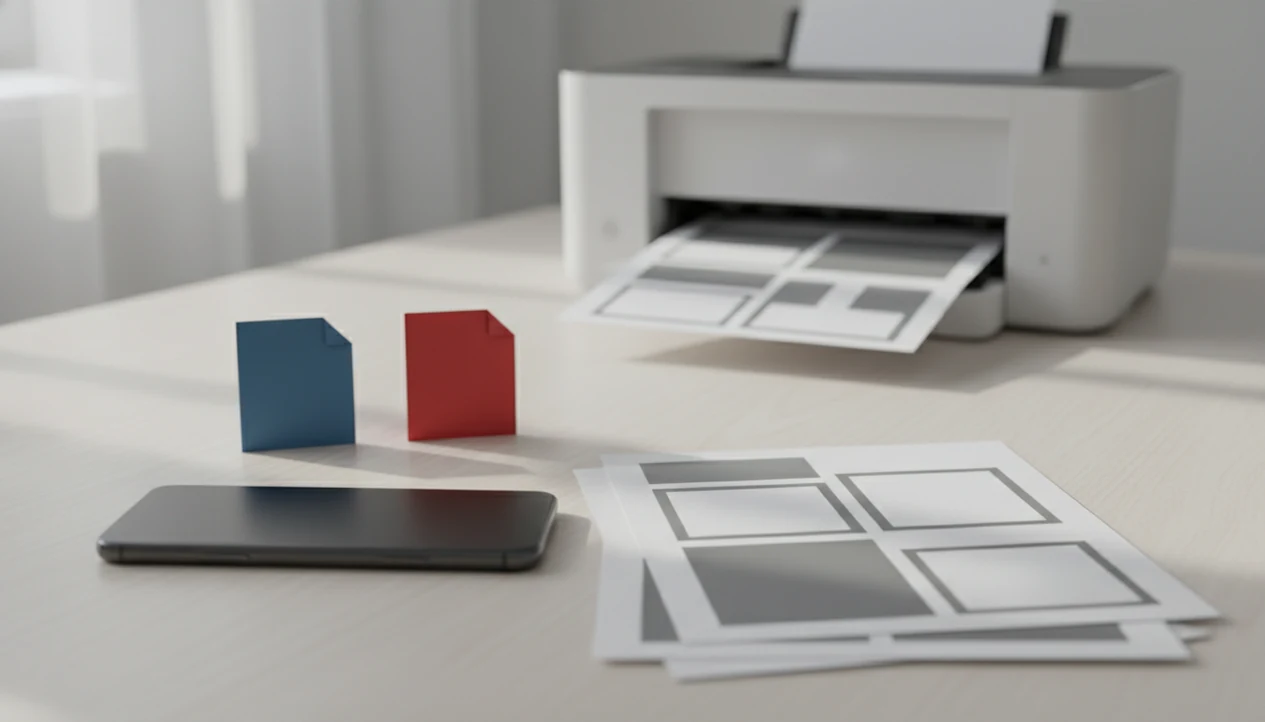
Word to PDF for printing means converting a DOCX or Word file into a PDF before you send it to a printer app, AirPrint, Android print service, or print shop so the page size, margins, images, and pagination are less likely to shift.
> A mobile DOCX-to-PDF converter turns editable Word documents into fixed-layout PDF files for iPhone and Android printing workflows.
- Convert the Word file after you finish editing, not while page breaks and images are still moving.
- Check page size, margins, fonts, images, and final page count before printing the PDF.
- A print-ready DOCX to PDF workflow reduces formatting drift, but it does not fix poor layout, low-resolution images, or missing bleed.
Word to PDF for printing definition and print-ready purpose
Word to PDF for printing locks the visible Word layout into a PDF file before the print step. The purpose is consistency: the same page size, margins, page breaks, fonts, images, and pagination should travel more predictably across phones, tablets, computers, printer apps, and print shop systems.
“Print-ready” needs a careful definition. For everyday documents, it means easier to print consistently, not guaranteed commercial prepress compliance. A resume, invoice, class handout, or proposal can be print-ready enough for normal office printing and still lack bleed, crop marks, or a managed color profile.
Mobile matters here. Pew Research reported that 92% of U.S. adults owned a smartphone in 2024, and 31% owned a tablet, according to its mobile fact sheet source. That is why the last layout check often happens in Files, Downloads, Gmail, or a printer app.
The pocket check is real.
Five facts about print Word as PDF workflows
- DOCX-to-PDF conversion for printing is mainly about reducing formatting drift before paper output, especially when the file moves between apps or devices.
- Mobile users often rely on Share, Print, Save to Files, Google Drive upload, or an app import/export flow instead of a desktop Word menu.
- Offline conversion depends on the tool; installed apps may work locally, while browser converters usually need internet access.
- iPhone and Android workflows differ because iOS uses Files and share sheets, while Android often involves Downloads, document pickers, print services, and app permissions.
- Margins, unsupported fonts, complex tables, embedded objects, and low-quality images can still cause bad output after conversion.
When we test the flow, we usually save the exported PDF first, then open it again before sending. That extra open catches the obvious mistakes. A cover letter that fits one page in Word can become two pages if a font changes.
For related post-conversion checks, the Word to PDF workflow after conversion is the safer place to slow down.
How Word to PDF for printing works
Word to PDF for printing works by turning an editable document into fixed pages before the printer sees it. The goal is not magic repair; it is to preserve the page geometry, meaning the visible positions of text, margins, images, and tables.
A DOCX file can reflow because its text, fonts, anchors, tables, and objects are still live editing parts. When another app opens it, a missing font or slightly different text engine can move a line, push a table, or change a page break. PDF export writes those pages into a more fixed layout, so the same geometry is less likely to change as the file moves from Word, Files, Downloads, email, or a printer app. The highest-risk elements are fonts, images, and tables because they affect spacing and page breaks quickly.
There are two main paths. App-based conversion opens the DOCX and exports a PDF from the converter or document app. Operating-system print-to-PDF uses the device’s print pipeline and saves a PDF instead of sending paper to a printer. Even after a clean conversion, printer scaling settings can still shrink, crop, or reposition the final paper output.
Mobile Word to PDF for printing conversion process
A mobile Word to PDF converter reads the DOCX structure, lays out text and objects into pages, then writes a fixed-layout PDF. In plain terms, the editable Word file becomes a page-based file where the visible positions are harder to disturb.
That fixed layout is why PDFs behave more predictably for printing than DOCX files. Word documents are still editable, so line breaks, fonts, image anchors, and tables can shift when another app opens them. A PDF is not immune to printer scaling, but its page geometry is more stable.
App-based DOCX conversion imports the file and exports a PDF directly. Virtual print-to-PDF uses the operating system’s print path, then saves a PDF instead of making paper. Share-to-PDF methods sit somewhere between those two, depending on the source app.
Results can vary by operating system version, source app, installed fonts, and document complexity. We have seen a proposal from a chat message convert cleanly, then a table-heavy assignment from a course folder lose a line at the bottom.
Requirements before making a print-ready DOCX to PDF
What should you check before making a print-ready DOCX to PDF? Finish editing first, then confirm the document’s physical print setup before conversion.
Start with page size. Letter and A4 are not interchangeable, and that mismatch can move page breaks. Review margins, headers, footers, tables, image placement, and manual page breaks. If the references section must start on a new page, check that break before export, not after the file is already attached.
Use common fonts when possible. If your document uses a brand font or a decorative heading font, test the converted PDF carefully or switch to a safer font before printing. Unusual fonts are one of the quiet causes of reflow.
Save the latest DOCX locally, in Files, or in a clear cloud folder before opening it in a converter. A dependable mobile DOCX-to-PDF converter should deliver a dependable exported PDF, not a promise that every weak layout becomes press-ready.
iPhone and Android steps for Word to PDF printing
Use this mobile workflow when you need to print Word as PDF from a phone or tablet.
- Open the DOCX from Files, email, Messages, Google Drive, Android Downloads, or a converter app.
- Share or import the Word file into the conversion tool, such as Files, a document app, or a dedicated DOCX-to-PDF converter.
- Convert the document to PDF and save it to the phone, tablet, Files app, Downloads folder, or cloud folder.
- Open the exported PDF and review every page before printing.
- Send the checked PDF to AirPrint, Android print service, a printer app, email, or a print shop upload form.
For most mobile users, saving and checking the PDF before printing is safer than printing directly from Word because it separates conversion problems from printer problems.
We like opening the converted file in the iPhone Files preview before sending. On Android, the Downloads folder is the first place we check when the printer app cannot find the PDF. If the file is too large for the print shop upload, reduce Word to PDF file size before submitting.
Print Word as PDF versus app-based DOCX conversion
Print to PDF is a virtual print step that creates a PDF file instead of paper. App-based DOCX conversion imports the Word file and exports a PDF directly, often with more file-handling options.
| Workflow | How it works | Convenience | Offline availability | Upload privacy | File support and batch potential |
|---|---|---|---|---|---|
| Virtual print to PDF | Uses the phone, tablet, or app print path to save a PDF | Good when the source app supports Print | Varies by device and app | Often local, but app behavior varies | Usually one file at a time |
| Share to PDF | Sends the Word file through the share sheet or document menu | Fast when the file is already open | Varies by destination app | Depends on chosen app | Limited by share options |
| App-based conversion | Imports DOCX, then exports PDF | Good for repeat conversion work | Some apps may support local conversion | Depends on app design | App store listings often mention multiple file types or batch-like flows |
App-store listings vary by tool, so treat file-type counts as claims to verify before relying on them. For platform behavior, Apple documents AirPrint printer requirements at Apple Support, and Google documents Android printing through its help center at Google Help.
PDF print check for margins, pages, fonts, and images
A PDF print check should confirm the final page count, visible margins, font behavior, and image quality before the file leaves your phone. Do this before AirPrint, Android print service, email, or print shop upload.
For commercial jobs, ask the print shop for its required page size, bleed, color, and resolution settings before exporting. Many office PDFs print acceptably without those settings, but flyers, books, and full-bleed designs usually need stricter specifications.
- Page count: Compare the PDF page count with the intended Word document. A one-page resume should not quietly become two pages.
- Margins and headers: Look at all four edges. Headers, footers, page numbers, and signatures should not sit in the printer’s clipped area.
- Tables and images: Zoom in on tables, logos, charts, screenshots, and signature blocks. Low-resolution images can look acceptable on a phone and poor on paper.
- Fonts: Compare the Word file and PDF side by side if the document uses nonstandard fonts. A shifted page break is often a font clue.
- Test print: Print one page first when the job matters.
If the checked PDF must be sent by email, the handoff details are covered in Word to PDF for email attachments.
Common Word to PDF for printing mistakes
The most common mistake is converting too early. If you are still moving images, editing tables, or squeezing a paragraph onto the previous page, the PDF is only a snapshot of unfinished layout.
Another mistake is assuming the PDF fixes Word problems. It does not repair bad margins, broken page breaks, or a table that already runs past the printable area. It usually preserves what is visible, including the flaws.
Unusual fonts, oversized images, and embedded objects need a close check. A chart pasted from another app may look fine in Word, then rasterize poorly or move after conversion. Phone preview can also mislead you because printer scaling may shrink or crop the page.
Browser converters add another layer. They can be convenient, but internet access, upload size, and privacy matter when the file contains client details or school records. We have seen a portal reject a DOCX upload, then accept the same document only after a PDF conversion and rename step. For that handoff, upload Word to PDF to portal is the cleaner workflow.
Limitations
Word to PDF for printing improves predictability, but it cannot guarantee perfect paper output. Treat conversion as a layout-preservation step, not a repair tool.
- Word-to-PDF conversion does not repair a poorly designed Word document.
- Bad margins, awkward page breaks, low-resolution images, and broken tables can remain problematic after conversion.
- Unsupported fonts can substitute or reflow if the converter cannot preserve them.
- Embedded objects, charts, and pasted content may change appearance in some conversion paths.
- Some mobile apps and browser tools require internet access or impose upload and file-size limits.
- A normal PDF may not meet commercial printing requirements for bleed, color profile, crop marks, or image resolution.
- iPhone and Android results can vary by OS version, source app, permissions, and printer settings.
- Printer scaling settings can still shrink, crop, or reposition a correctly converted PDF.
Small mismatch, big annoyance.
For sensitive documents, consider whether you need to password protect PDF after Word conversion before sharing.
FAQ
How do I print a Word document as a PDF?
Open the Word file, convert it to PDF or use a print-to-PDF option, save the PDF, then print the saved PDF. Check the PDF preview before sending it to a printer or print shop.
Can I convert a DOCX file to PDF on iPhone?
Yes, iPhone users can convert a DOCX file from Files, Share, a compatible document app, or a Word-to-PDF app such as WordPDF. The exact path depends on where the file is stored and which apps have permission to open it.
Can I convert a DOCX file to PDF on Android?
Yes, Android users can convert through a converter app, the share menu, an Android print service, or a compatible document app. The exported PDF is often saved in Downloads or a selected cloud folder.
Does a PDF keep the same margins as my Word document?
A PDF usually preserves the visible margins from the converted Word document. Bad Word margin settings or printer scaling can still affect the printed output.
Is print to PDF the same as printing on paper?
No, print to PDF creates a digital PDF file through a virtual print process. It does not send pages to a physical printer.
Is a DOCX to PDF file automatically print ready?
No, a converted PDF can be easier to print, but it may not meet professional requirements for bleed, image resolution, crop marks, or color handling. Always review the final PDF before printing.
Can a DOCX to PDF converter work offline?
Some installed converters can work offline, while browser-based converters generally require an internet connection. Check the app’s offline behavior before using it for time-sensitive print jobs.
Why did my PDF layout change after converting from Word?
Common causes include unsupported fonts, complex tables, image anchoring, page size mismatch, embedded objects, or printer scaling. Compare the Word file and PDF side by side to find the first page where the shift appears.